




Choosing a Treatment
Choosing a Treatment
Available en Español
If you have PTSD, you have treatment options. There are talk therapies and medications that have been shown to work in multiple studies. Learn how to compare the best options and work with your provider to make the best choices for yourself.
Reading time: minutes
What Treatments Are Effective?
Research tells us that for the average patient, trauma-focused psychotherapies are the most effective treatment for PTSD. Antidepressant medications or other psychotherapies that do not focus on trauma are also recommended for PTSD. Learn more about effective Talk Therapy and Medications for PTSD
Even among the most strongly recommended PTSD treatments, how well a particular treatment works can vary from one person to the next. At this time, there is no scientific way to know which PTSD treatment will work best for you as an individual.
What Is Shared Decision Making?
You will need to work together with your provider to choose a treatment that makes sense to you and suits your needs. This is called shared decision making. During this process, your provider will give you information about the pros and cons of different PTSD treatments. Don't be afraid to ask questions or tell your provider about your goals and preferences. You can have say in which treatment you receive. Ultimately, you and your provider can arrive at a decision that you both agree on.
Learn About PTSD Treatment Options
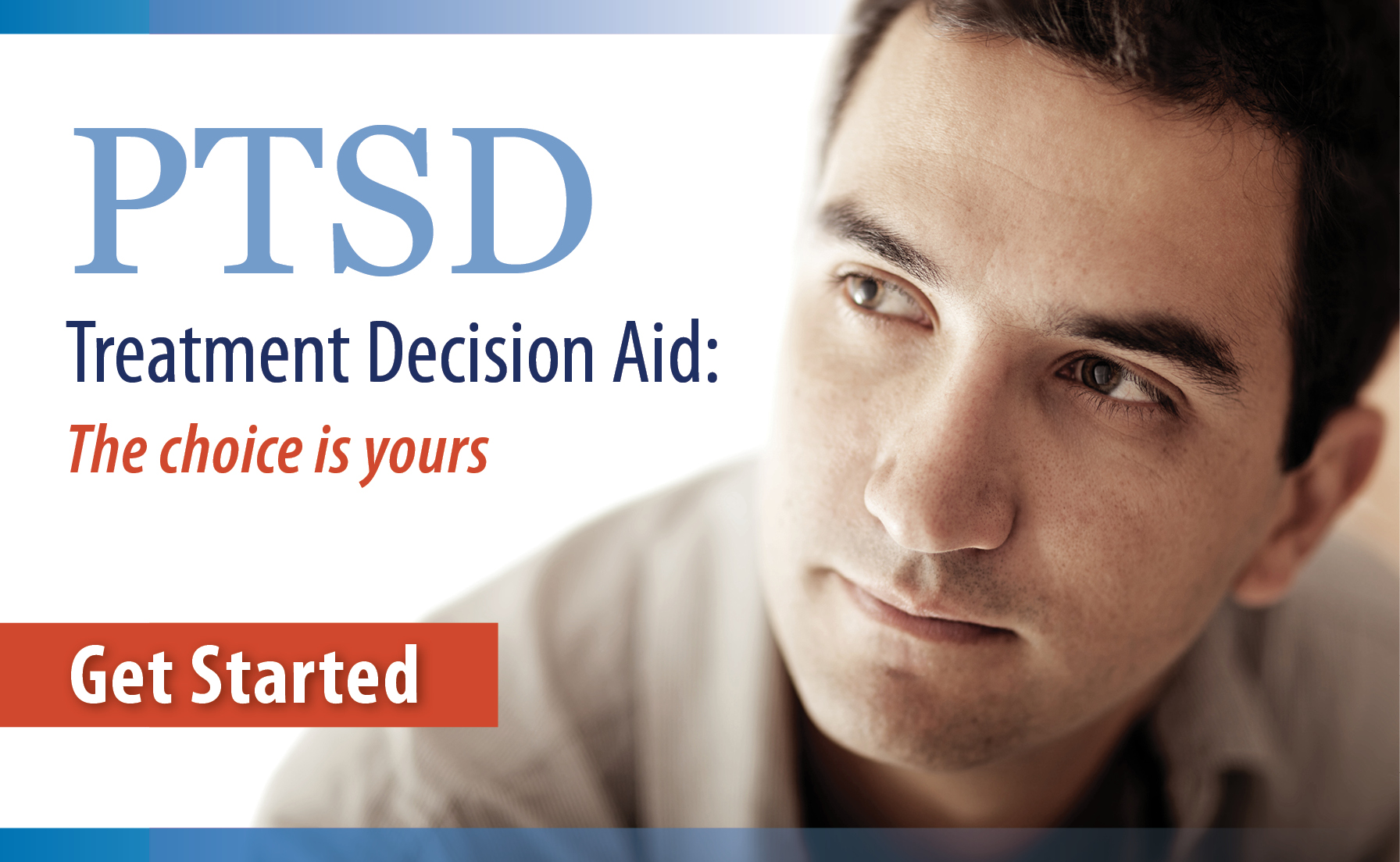
To learn more about your PTSD treatment options, get started with the PTSD Treatment Decision Aid. This free online tool helps you see how different treatments measure up against one another. It also helps you think about which treatment might be best for you and gives you tips on how to work with your provider to decide on a treatment.
Using the PTSD Treatment Decision Aid, you can:
- Watch videos of providers explaining how treatments work
- Build a chart to compare the treatments you like the most
- Print a personalized summary
NOTE: This Decision Aid is not a substitute for medical care or advice from a provider. Only a licensed professional can diagnose PTSD.
You May Also Be Interested In